Guide
How to Choose an Apparel Sourcing Partner for Your Canadian Brand
Practical guide for Canadian brands evaluating apparel sourcing partners. Learn how to audit manufacturing capabilities, control fabric quality, manage lead times, and verify compliance.
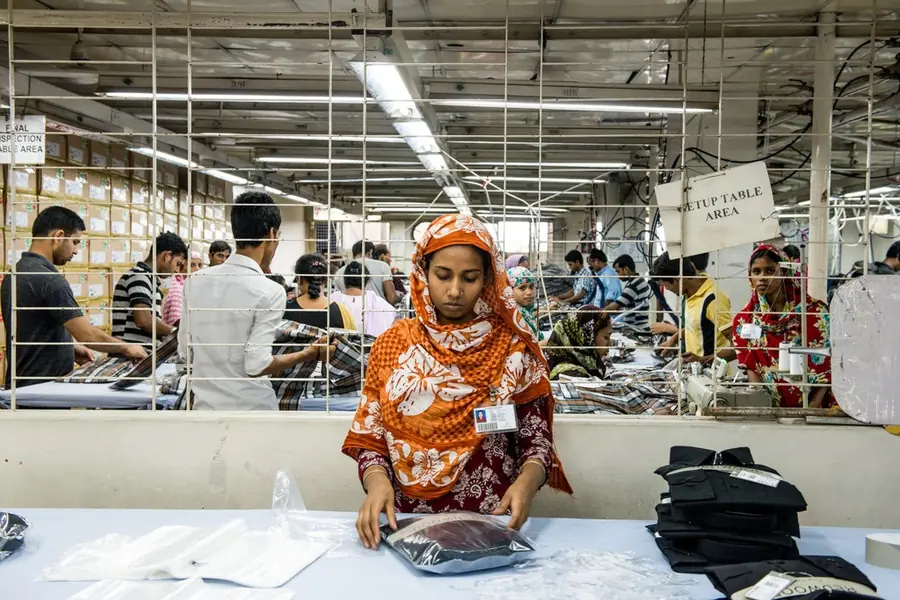
Choose a sourcing partner on four pillars: technical competence, documented quality planning, supply chain transparency and commercial clarity. Judge quotes on total landed cost, not only unit price.
Look beyond the initial price quote
For growing Canadian fashion labels, workwear distributors and corporate merchandise buyers, a low FOB unit cost is attractive. But margin is quickly eroded by unmanaged risks: inconsistent fit, poor seam construction, delayed seasonal deliveries or non-compliant environmental claims. The right partner acts as your technical liaison: turning design concepts into precise tech packs, holding quality standards on the factory floor and keeping communication clear. Our tech pack guide shows what a good brief contains.
Check product and category fit
A factory optimised for high-volume circular knit T-shirts may lack the machinery, heavy-duty thread handling or seam-sealing needed for industrial workwear or tailored outerwear. Ask for evidence of production in your exact category, whether fleece, heavy denim, woven aprons or high-visibility wear. Make sure the partner understands stitches per inch (SPI), bar-tacking stress points and the colourfastness needed for Canadian commercial laundries or retail. See our custom workwear page.
Insist on a documented sampling sequence
Defects and fit problems rarely come from deliberate factory errors. They usually start with ambiguous specifications during sampling. A professional partner runs proto, fit, size set and pre-production samples before any bulk fabric is cut.
| Sample stage | Objective | What you verify |
|---|---|---|
| Proto | Initial look, silhouette and basic pattern construction | Proportion, pocket placement, seam lines |
| Fit | Garment dimensions against the measurement chart | Grade rules, ease of movement, point of measure accuracy |
| Size set | Grading across the full size range, for example XS to 3XL | Proportional scaling, shoulder slope, sleeve length |
| Pre-production (PP) | Final baseline on the production line with real fabric, trims and colours | Hand-feel, shade band, trims, workmanship standard |
Build quality inspection into the process
Relying only on a final inspection before shipment is high risk. Look for documented inspection gates using ISO 2859-1 (ANSI/ASQ Z1.4) Acceptable Quality Limit (AQL) sampling plans, inline checks during sewing to catch stitching, tension or alignment issues early, and a final random inspection. Agree critical, major and minor defect thresholds upfront. Our projects use a three-stage inspection to AQL 2.5: AQL 2.5 explained.
Know the Canadian compliance rules
Under the Textile Labelling Act, consumer textile articles need accurate fibre content disclosure in English and French, plus dealer identification (Competition Bureau Canada, 2024). Amendments to the Competition Act require environmental claims such as "sustainable" or "100% eco-friendly" to be substantiated with adequate, internationally recognised testing (Competition Bureau Canada, 2025). When you buy certified material such as GOTS cotton, GRS polyester or OEKO-TEX Standard 100 fabric, request Scope Certificates (SC) and Transaction Certificates (TC). A certificate held by a yarn spinner does not validate a finished garment unless the whole custody chain is documented.
Compare total landed cost, Incoterms and CBSA importing
Evaluate quotes on total landed cost and know which Incoterm applies: FOB port of origin, CIF or DDP. Importers of record must comply with the CBSA Assessment and Revenue Management (CARM) system: keep a Business Number import-export account, post financial security and manage Commercial Accounting Declarations through the CARM Client Portal. Ask your partner for accurate Harmonized System (HS) classification descriptions to avoid delays. Details in our Canadian import compliance guide.
Supplier evaluation checklist
- Technical and category fit: experience in your garment class, fabric weight and construction.
- Documented sampling: proto, fit, size set and PP approvals.
- Quality inspection plan: agreed AQL, inline checks and tolerances.
- Compliance verification: valid SC and TC for organic or recycled claims, plus social audits such as BSCI or WRAP.
- Commercial transparency: itemised quotes stating Incoterms, packaging, testing and shipping assumptions.
- Milestone management: a calendar covering material booking, cutting, sewing, inspection and vessel departure.
How DRESSOURCE supports Canadian brands
DRESSOURCE is a Bangladesh-based sourcing company that supports international brands, retailers and corporate merchandise buyers across apparel, workwear, homeware and promotional categories. We streamline product development, coordinate sample creation, monitor factory compliance and oversee quality control before goods ship. To have your tech pack or brief reviewed, contact us or send your brief.
Quick answers
What should I check first when choosing an apparel sourcing partner?
Category fit: ask for evidence of production in your exact garment type, then check the sampling process, the quality plan, compliance documents and how quotes handle Incoterms and landed cost.
Why is the pre-production sample so important?
The signed PP sample is the agreed standard for bulk production, so any quality dispute can be measured against it.
Sources
Related guides
Importing Apparel into Canada: Textile Labelling, CARM and Incoterms
What Canadian brands need to know about textile labelling, environmental claims, CBSA CARM registration and Incoterms when importing apparel.
GUIDEGarment Sampling Stages: Proto, Fit, Size Set and Pre-Production
Understand each sample stage in apparel development, what to check, and why the pre-production sample matters.
GUIDEAQL 2.5 Explained: Garment Quality Inspection
What AQL 2.5 means for your apparel order and how three-stage inspection works.
Know exactly who is making your order.
Talk to our team directly, get written updates at every stage, and receive your quote within 24 hours.
More guides for Canadian brands
Importing Apparel into Canada: Textile Labelling, CARM and Incoterms
What Canadian brands need to know about textile labelling, environmental claims, CBSA CARM registration and Incoterms when importing apparel.
GUIDE · 3 MINGarment Sampling Stages: Proto, Fit, Size Set and Pre-Production
Understand each sample stage in apparel development, what to check, and why the pre-production sample matters.
GUIDE · 3 MINHow to Create a Tech Pack for Garment Manufacturing
What a tech pack contains and why factories need one.